Run Ragged Small Area Game Ice Hockey Systems Inc.
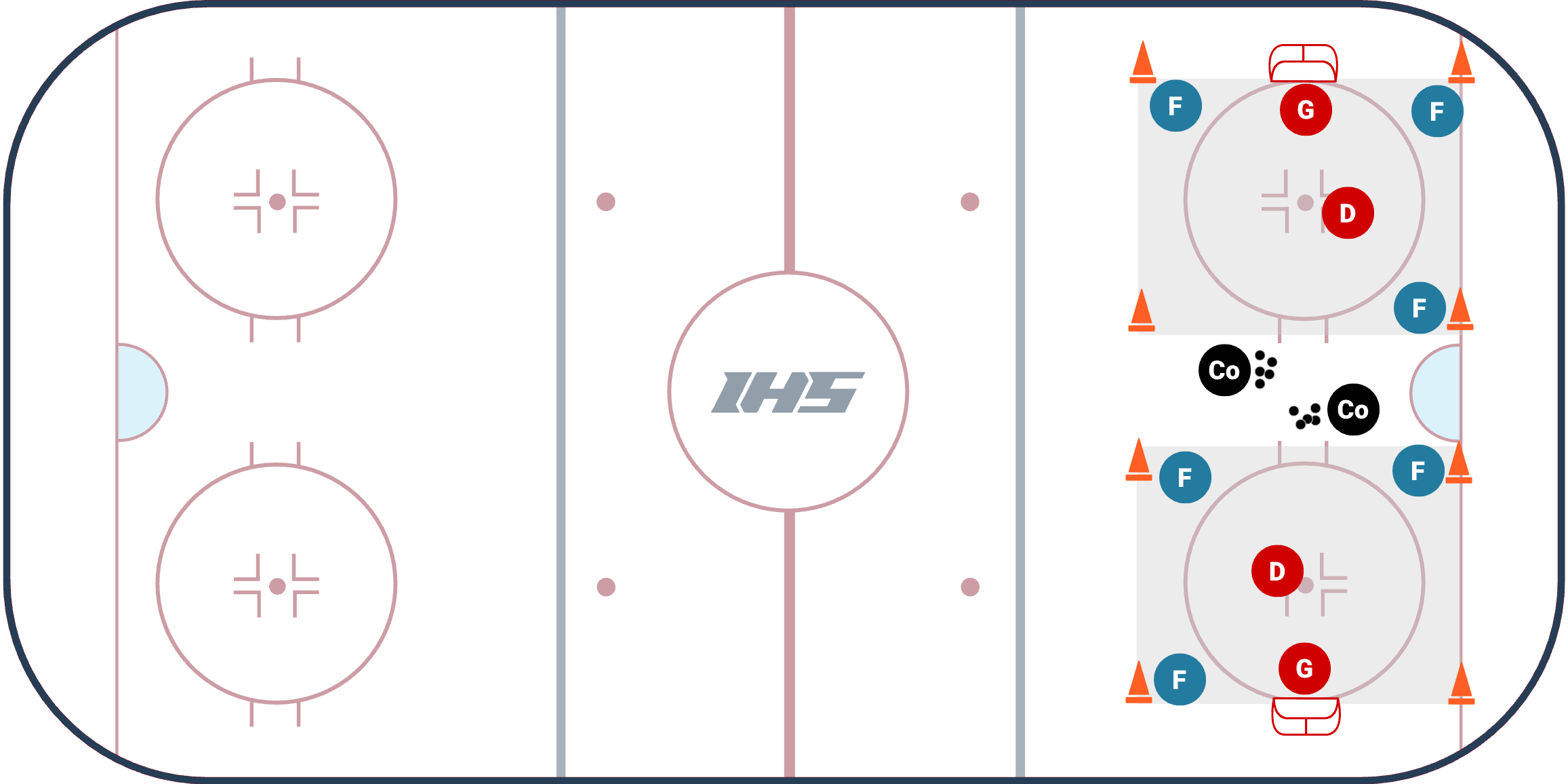
Drill your players' offensive and defensive zone play with this unique small area game.Watch more USA Hockey videos: http://www.youtube.com/USAHOCKEYHQSubscr.
Early season fullice plan for U8/Novice. Three stations including a smallarea game. Hockey

Defenseman Specific Drills Aid In Development Of All Young Players. Small area games, activities or drills that replicate game situations and target skills specific to the position a player plays (forward or defenseman) can be an effective way to use your ice time. Friday, July 26, 2013 - 13:27. Tags: defenseman, drills, skills, youth hockey.
The NetFront Play Hockey Drill Hockey drills, Hockey, Hockey life

Download the full manual of small-area games including animation and audio. If you have trouble playing the files, download the document to your computer. To download, simply right-click on the link below and save the file to your desktop.. By USA Hockey 04/04/2024, 4:00pm MDT ; Inaugural USA Hockey National Goaltending Symposium Headed to.
7 pass 2 vs. 1 Small Area Hockey Game Hockey drills, Hockey, Ice hockey

Here are five small area games that can be used to teach important hockey concepts while keeping all players focused and engaged. Breakouts. Defensive Zone Coverage. Power Plays. Transition Situations. Skills Around the Net. For more examples of small area games, click here or design your own small area game on USA Hockey's Mobile Coach App.
Small Area Hockey Games App Sneak Peek
Myth 1: Small-ice hockey isn't real hockey. That was a persistent grumble when USA Hockey's American Development Model recommended cross-ice and half-ice games for 6U and 8U players more than a decade ago. But two things about it: One, it's age-appropriate because smaller legs and bodies shouldn't be tasked with skating up and down a.
3 Small Area Games that Teach Puck Control

Game # 9: Swiss 4 vs. 2. Swiss 4 vs. 2 Scoring Game Description: A fun small area hockey game that helps the offense work on their decision making by creating passing & scoring opportunities by keeping head up, being patient, using deception and communicating with their teammates. Players: 4 forwards and 2 defenders.
Small Area Hockey Drills YouTube

At least some broader acceptance of small-area hockey owes a bit of gratitude to a Division III college program right here in New England.. "Bill coached his college teams 80 to 90 percent small-area games in practice, and this is going back 25 or 30 years now," Grillo said, while pointing out that the greatest credit for coaches.
Little field hockey games at camp. Field Hockey Games, Soccer Field, Morning Line, Push Up

6) Reinforces Valuable Skills. Small area games automatically reinforce major skills like skating, passing, puck control, and shooting, but they also help practice core concepts & habits of game play. For offensive players they encourage creating time and space by picking your head up and working with your teammates.
QUARTER ICE 3 VS. 3 Small Area Game Hockey drills, Hockey, Hockey training

In this Global Skills Showcase presentation, Slugocki explains how small area games can help sharpen every aspect of your team. There's more to mashing drills together to create a practice plan, it's about designing practices to develop hockey sense. Become a member of The Coaches Site to watch the entire presentation, along with 500+ hours.
Pin on Gavin and Alex

By: USA Hockey Magazine. Small area games are excellent teachers because they allow players of all ages and skill levels to work on their basic skills in confined spaces and competitive situations. By using small areas and short shifts, players are challenged to read and react quickly under pressure, and by doing so they learn to think and see.
Full ice practice plan for Novice / U8, with three stations. One station is a smallarea game

Small-area games develop and improve individual and team skills. Players can develop and improve every skill related to the game of hockey through the use of small-area games. The next chapter of this manual is dedicated to taking a look at a number of the skills that small-area games can be use to teach.
Ice Hockey Games at Cabin 401 Bar & Grill get your hockey on!
Coaching Hockey With Small-Area Games. Paperback - November 28, 2022. Small-area games have been proven to increase a player's ability to excel in tighter spaces, increase explosive speed, improve decision making, and enhance efficiency on the ice. Used with some of hockey's most elite players, this small game methodology can now be used.
Run Ragged Small Area Game Area games, Hockey drills, Hockey training

Small-area games are a cornerstone of hockey training, benefiting players of all ages and skill levels. These focused drills, conducted within confined spaces, facilitate comprehensive skill development while instilling critical aspects of gameplay. From puck handling and passing to defensive techniques and on-ice intelligence, these games provide a well-rounded platform for honing hockey prowess.
Small Area Games NEHJ Skills Segment Sponsored by FMC Ice Sports YouTube

Small area games, also known as "station-based" or "pond hockey" drills, have become increasingly popular in hockey development for players of all ages. These types of games provide a more dynamic and game-like environment for players to improve their skills and decision-making abilities. In this blog post, we will discuss the benefits of small area games for hockey development for players.
Fullice four station plan for novice / U8. Includes smallarea game. Dek Hockey, Hockey Camp

No#7 Hanger Small Area Games. Players play 3v3 with the nets in each corner. One player must remain on the offensive side of the ice, creating a 3v2 for the other team on their offensive side of the ice. Promote offensive players hunting loose pucks and outnumbering the defending team before they can transition. No#8 Flipper Cross Ice 3@2.
AgeSpecific Training Hockey, Youth hockey, American hockey

Small-area games are competitive hockey drills done in a smaller-than-normal playing area. This can be cross-ice, neutral zone, corners or something else, depending what coaches are trying to teach. There are no limitations on how to use the ice. Smaller groups of players participate with a higher and more-consistent intensity, including lots.